By Chetana V iyer and Akshath Srinivas*
Summary
The article explains how digital twins, virtual models that mirror real machines using live sensor data, are transforming autonomous car manufacturing. It covers the idea’s origins in NASA’s Apollo 13 mission, then describes how digital twins work by collecting data, creating a synchronized virtual model, and running simulations to predict issues and improve performance.
It also shows how automakers use digital twins at every stage: designing prototypes, testing sensors, running factory operations, and validating self-driving systems in virtual environments. Finally, the article highlights the technology's future, where faster networks and advanced analytics could enable digital twins to make real-time decisions and support vehicles throughout their lifespans.
Digital Twin
A digital twin is simply a highly detailed and realistic digital copy of something that exists in the physical world, such as a machine, production line, or even an entire car. It’s much more than just a drawing or a 3D model; it’s a living, digital representation that uses data streaming in from sensors on the real object to stay up to date with every change and event. This digital version lets people see what’s happening inside the physical asset at any given moment, try out new ideas in a virtual environment, diagnose problems before they actually occur, and keep everything running smoothly. The digital twin becomes a bridge between the real and digital worlds, making it possible to test, monitor, and optimize physical systems with incredible precision and flexibility.
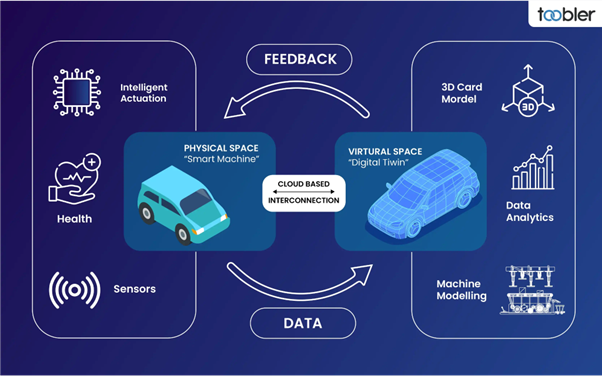
Figure 1: Representation of a digital twin. Source: Toobler

Origin of Digital Twin
The concept traces back to NASA’s space exploration missions. During the Apollo 13 mission in 1970, an explosion in one of the oxygen tanks caused severe damage to the spacecraft, threatening the lives of the astronauts on board. This left NASA engineers with critical challenges to solve remotely, as the crew was far from Earth and could not receive direct physical help. To tackle this, NASA used ground-based simulators that replicated the exact conditions and status of the damaged spacecraft based on real-time data sent back by Apollo 13.
This simulator functioned as an early form of a digital twin, a virtual representation of the spacecraft that mirrored its problems and behaviors in real-time. The engineers simulated the fix on the digital twin, verified it would work, and then guided astronauts through its implementation.
Although these early "twins" were not digital, they set the foundation for today's digital twin technology. The idea evolved with advances in computer modeling and real-time data transfer, and by the early 2000s, the term ‘digital twin’ became widely recognized when NASA’s John Vickers used it in 2010.
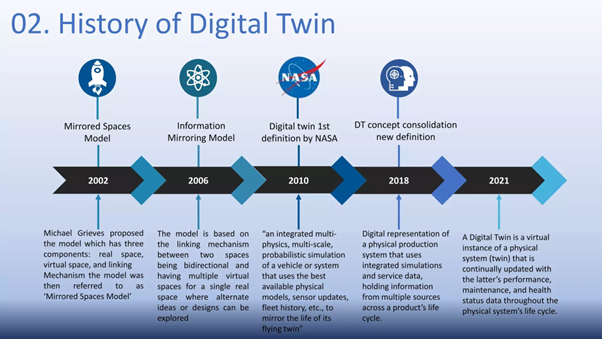 Figure 2: Timeline of the digital twin. Source: SildeShare
Working of a Digital Twin
The working of a digital twin can be understood in three key stages:
1. Data Collection and Integration
The physical asset, whether it’s a machine, vehicle, or factory—is equipped with numerous sensors that capture data points such as temperature, pressure, vibration, speed, and operational status. These Internet of Things (IoT) devices continuously stream data about the asset’s current state to a software platform. This real-time data is aggregated, cleaned, and integrated to provide a comprehensive and accurate picture of the physical entity.
2. Virtual Model Creation and Synchronization
Using this sensor data, engineers create a highly detailed digital replica of the physical asset using CAD, 3D modeling, and simulation software. This digital model mimics the behavior, appearance, and functional characteristics of the real asset. The digital twin is continuously synced with live data to ensure it reflects actual operating conditions, capturing even subtle changes as they occur. This synchronized update happens at a frequency tailored to the application—from near real-time to periodic updates depending on needs.
3. Analytics, Simulation, and Decision Making
The digital twin leverages advanced analytics, machine learning, and simulation tools to process the vast amounts of data it receives. It can perform real-time analysis to detect anomalies, predict failures, and test “what-if” scenarios without affecting the real asset. Through simulation, it can explore multiple options to optimize processes or mitigate risks. Some digital twins can also integrate with control systems to implement changes in the physical asset automatically or guide human operators for better decisions.
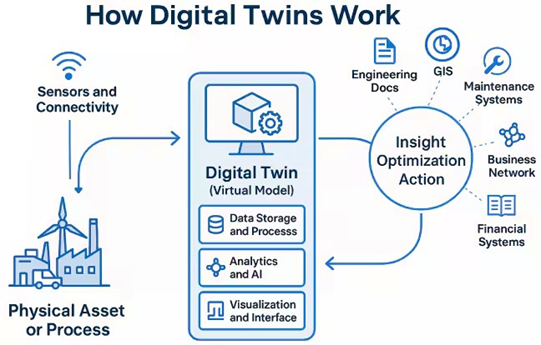
Figure 3: Pictorial representation of the working of a digital twin. Source: Open Text
Integration with Autonomous Car Factories
Prototyping
Automakers create virtual models using data from extensive tests of self-driving cars. These digital twins simulate how autonomous vehicle software responds to unpredictable conditions like weather and traffic, making prototype testing faster, safer, and more cost-effective. Crash simulations and other functional tests can also be done virtually, reducing the need for physical prototypes.
Designing and Sensor Testing
Picture a designer experimenting with new sensor layouts. With digital twins, they create virtual sensor setups inside the car and test how these sensors perform in various conditions, such as fog, rain, or bright sunlight, without leaving their desk. They also simulate the car’s internal networking system, making sure data flows quickly and smoothly between sensors and the car’s brain. Cybersecurity testing is also conducted within digital twins to visualize potential vulnerabilities and comprehensively address safety risks before production.
Manufacturing
Digital twins replicate the entire production process, including robotic assembly lines, supply chains, and quality control systems. Manufacturers can simulate and optimize workflows, identify bottlenecks, and reduce downtime by predicting equipment failures ahead of time. This virtual oversight enables smoother, more flexible, and efficient manufacturing of autonomous cars, adapting quickly to design changes or supply issues.
Testing and Validation
Digital twins serve as comprehensive virtual testing grounds where autonomous driving systems are trained and validated against a wide range of traffic conditions, speeds, and object detection challenges. Integration of multiple digital twins allows building complex, layered testing platforms that speed up development timelines while keeping real-world testing risks low. This structure highlights digital twin integration across the full lifecycle of autonomous vehicles—from early prototypes and sensor design, through manufacturing, to final testing—accelerating innovation and ensuring safer, smarter cars.
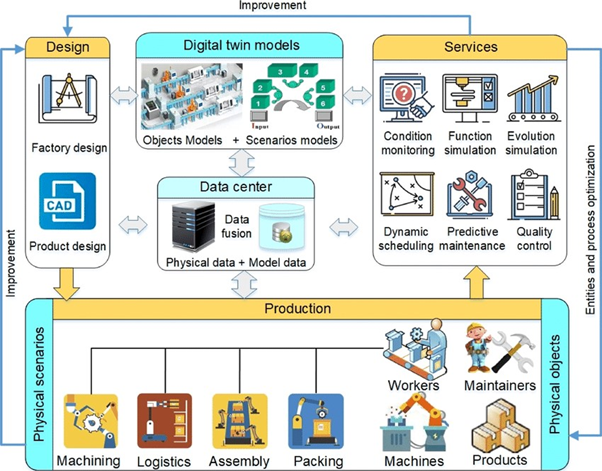
Figure 4: Representation of Digital twin application Source: ResearchGate
Future Prospects of Digital Twin-Driven Manufacturing
Looking forward, the role of the Digital Twin is going to shift from a passive observer to an active decision-maker. Right now, these systems tell us when something is wrong; soon, by integrating with generative AI, they will likely be able to fix production glitches on the spot without needing a human engineer to step in.
We are also approaching the era of 6G, which will virtually eliminate lag. This could enable a "Cognitive Digital Twin" that doesn't just stop at the factory door but tracks the vehicle's health for years after it hits the road. We are moving toward a reality where the line between the physical factory and the digital simulation blurs completely, making it possible to build safer, smarter autonomous cars faster than ever.
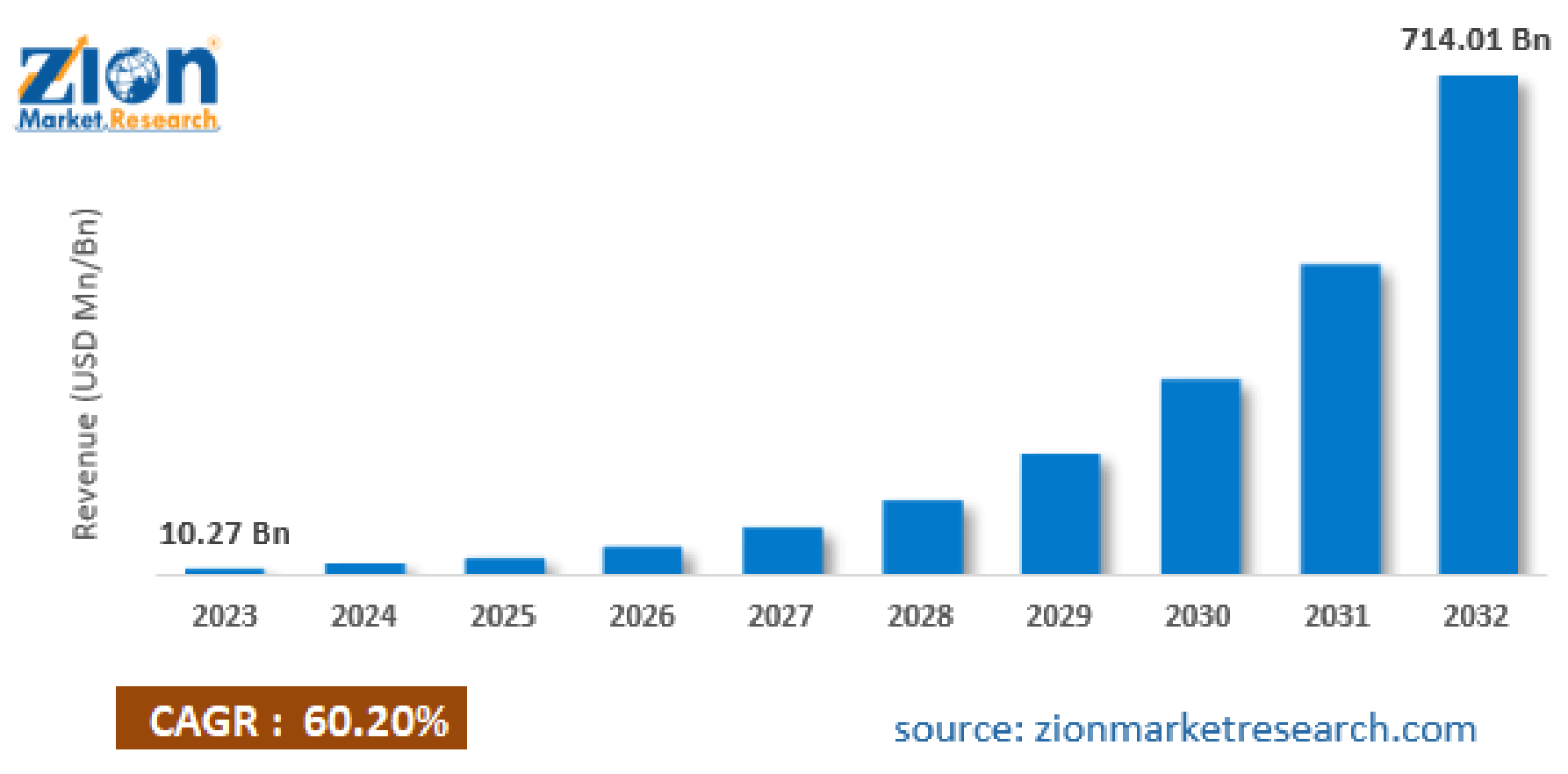 Figure 5: Projected market size increase of Digital twins. Source: Zion
Citations
Digital twin technology companies in the automotive industry," Toobler Blog, 2024.
What is a Digital Twin?", OpenText, 2024.
ResearchGate stores academic papers with visuals explaining digital twins.